5 Health Insurance Mistakes New Parents Make (And How To Avoid Them)

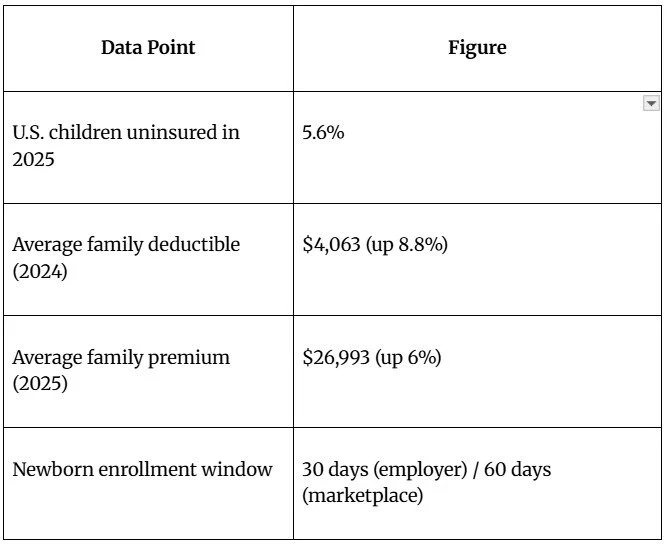
Getting health insurance coverage for a newborn is one of the earliest major decisions new parents make. Despite lower premiums for children compared to adults, 5.6% of U.S. children under 18 were still uninsured in 2025.
One of the biggest drivers behind that figure is the steep cost of care. Most families lean on employer-sponsored plans. Layoffs and sudden career changes can upend that safety net in the blink of an eye. Choosing a private plan then becomes necessary for many parents.
While choosing a private plan, the most common inclination is chasing the lowest premium available. Premiums are only part of what families can end up paying. Average family deductibles climbed 8.8% in 2024 to $4,063, according to federal data.
The good news is that most of these mistakes are easy to spot once you know what to look for. This article highlights five common missteps new parents make with health insurance and simple ways to avoid each.
Mistake #1: Chasing a Bronze Plan Based Only On the Lower Premium
Health insurance usually comes in tiers, and Bronze and Silver are the two most families end up choosing between. Bronze plans carry the lowest premiums, starting around $350 in New York. However, they do require a steep out-of-pocket, so they work best for healthy families with savings to fall back on, notes Life143.
Silver plans cost more upfront. But anyone earning under $39,900 in New York qualifies for cost-sharing reductions that bring deductibles way down.
Health insurance has gotten noticeably more expensive over the past few years. Family premiums for employer-sponsored coverage rose another 6% in 2025, reaching an average of $26,993.
So it makes sense that parents want to keep premiums down. The instinct usually pushes people toward Bronze as the default pick.
Many first-time parents choose the lowest monthly premium without realizing how much their healthcare needs can change after having children. This guide comparing Silver vs Bronze health plans explains how to choose coverage based on your family's expected medical needs, not just the monthly cost.
Mistake #2: Not Accounting for Increased Healthcare Usage After Having Children
Another common mistake is forgetting how frequently babies need medical care. Babies and young children tend to have far more routine appointments than healthy adults. The American Academy of Pediatrics (AAP) recommends six preventive visits during a baby's first year alone. This doesn't include sick visits, prescriptions, or emergency visits.
About 20% of U.S. children visit an emergency department each year, accounting for more than 30 million visits annually, according to a Health Affairs study. If you're not planning for that level of usage, an affordable-looking plan could surprise you. And not in a pleasant way.
A plan with a lower deductible or built-in pediatric copays naturally comes at a higher premium. However, paying a little more each month does make sense if you know you will use the plan frequently.
Compare the total yearly cost, not just the premium. Add up premiums, deductibles, copays, and likely prescription costs before deciding which plan gives your family the best value.
Mistake #3: Not Looking Beyond Monthly Premiums to Total Healthcare Costs
The real cost of a baby's healthcare runs well beyond the figure on a monthly bill. A premium by itself covers only a narrow slice of the real yearly cost. With U.S. healthcare spending up 7.2% from 2023 to 2024, parents have good reason to weigh the fuller cost before choosing.
Many tend to pick a plan with the smallest monthly bill, expecting that number to hold steady all year. Things change the moment a baby needs care beyond a routine visit. A plan with a high deductible might look like it saves $100 a month. Just one ER trip or a stretch of specialist appointments can erase that savings in a hurry.
Consider a plan with a $300 monthly premium and a $5,000 deductible. It can end up costing more across a baby's first year than a $400 monthly plan with a $1,500 deductible. Six pediatric visits, a couple of sick visits, and prescriptions can easily push the total past that mark.
Tally the full cost your family could face over the year before settling on a plan. Bring in the deductible, expected copays, coinsurance, and any prescriptions your baby might need. Set two or three plans side by side and compare the full numbers. That's the number you should be basing your decision on.
Mistake #4: Not Checking Pediatric Networks and Prescription Coverage
A plan can look great on paper premium-wise and still fall short of practical application. Some plans have thin pediatric networks, meaning the nearest in-network pediatrician or specialist could be much farther than expected. Provider access is a critical detail to consider when choosing health insurance.
In a recent interview, AMA CEO James L. Madara, M.D., warned, “Inaccurate directory information can have severe financial consequences for patients.” New parents should confirm a pediatrician’s network status directly with both the insurer and the provider before enrolling.
Prescription coverage is another overlooked factor. Common items like specific formulas, allergy medications, or reflux prescriptions might not be covered the way parents assume.
Before purchasing a plan, search for your pediatrician by name in the insurer's provider directory. Searching only by specialty is not advised. Call both the insurer and the pediatrician's office to confirm that the network status is current, since directories often lag behind.
Also check the plan's prescription formulary for specialty formula, allergy medication, or reflux prescriptions your baby might need. A few phone calls upfront can save real money and stress down the road.
Mistake #5: Not Reviewing Coverage During Open Enrollment
The first few weeks with a newborn can be a blur, and health insurance paperwork can be easy to push aside. The problem is that adding a baby to your coverage comes with a deadline.
For an employer-sponsored plan, parents generally need to request special enrollment within 30 days of the birth. Marketplace coverage gives families 60 days. If enrollment is completed on time, coverage can generally be effective from the baby’s date of birth.
You also need to check if your current plan still fits your growing family. A lot of parents assume the plan they had before pregnancy will simply carry over just fine, without asking if it covers what a baby needs.
Pediatric visits, vaccination schedules, and specialist access can look completely different from adult coverage.
Try to add the baby to your insurance plan within the first two weeks after birth. Call your insurer directly to confirm the exact deadline and required documents, since timelines can vary by plan and by state. Don’t stop there.
Before enrollment closes, list out every pediatrician visit, prescription, and unexpected expense you expect in the coming year. Compare that against what your current plan covers, and check whether a different plan offers better value now.
FAQs
1. How long do I have to add my newborn to health insurance?
Most employer plans allow 30 days, while marketplace plans allow 60 days. Confirm exact timelines directly with your insurer or employer.
2. Does my baby automatically have coverage right after birth?
Newborns are typically covered under their mother's plan for the first 30 days, but permanent enrollment still requires separate paperwork within that deadline.
3. Is a Silver or Bronze plan better for a newborn?
Silver often works better for lower deductibles and frequent visits, while Bronze suits healthy families prioritizing lower monthly premiums with savings available.
Key Numbers at a Glance
Moving Forward With Confidence
At the end of the day, no plan covers everything perfectly, and that's okay. What matters is walking in with a clearer picture than most parents start with. You now know what questions to ask, what numbers to check, and what mistakes tend to trip people up early on. Trust yourself to make a solid call with what you have. Insurance decisions can always be revisited later if something isn't working.